by Clara Vance
There is an old, weathered oak tree at the eastern edge of our property that casts a long, blue shadow across the yard every morning until the sun finally climbs past its crown. I have lived beside that oak for nearly two decades now, but in the beginning, I hardly noticed the rhythm of its shade. Back then, during my first genuine spring here in the Ozarks, my mind was running far faster than anything taking root in the soil.
I was thirty-two, full of nervous energy, and carrying a cardboard flat of young seed packets I had bought without much thought. I had spent the entire winter curled up by the hearth with dog-eared books on domestic herbalism, picturing a garden that resembled an old monastery apothecary by midsummer. I imagined stepping through the back screen door to gather neat bundles of chamomile blossoms, thick stalks of mint, and golden calendula heads ready for drying racks, all without a single hiccup in between.
The reality of that first plot was, of course, a humbling lesson in humility.
I hauled out a shovel while the ground was still thick and cold from late March rains. I turned over heavy clods of clay that dried into hard gray bricks under the early May sun, trapping tender roots before they ever had a chance to breathe. I sowed seeds directly into ground that sat in the deep shade of the timberline for half the day, and then I fretted over them endlessly, convinced that a daily deluge from the garden hose would make up for poor placement and cold mud. By mid-June, my grand apothecary consisted of a few spindly chamomile plants fighting for light and a modest patch of yellow petals that seemed to mock my hurried expectations.
It took several quiet seasons—and many quiet failures—to understand that cultivating medicinal botanicals is far less about imposing our will on the ground than it is about learning to wait.
When you spend enough mornings with your boots in the dirt, you begin to realize that the plants we turn to for wellness carry an innate patience. They do not answer to the calendar in our kitchen or our desire for an immediate harvest; they answer only to the gradual warming of the earth, the tilt of the sun, and the quiet porosity of the soil beneath them.
Over the years, I stopped reaching for bags of synthetic fertilizers to force quick growth. Herbs grown for their essential oils and resins don’t want rich, pampered ground anyway; when you feed them too heavily, they grow lush and leafy, but they lose the deep, concentrated aroma that gives them their true character. Instead, I learned to work mature leaf mold and composted barn straw into the top few inches of dirt in late autumn, letting the winter snows and earthworms do the delicate work of aerating the beds. By the time spring returns, the dirt feels loose and spongy underfoot, holding just enough moisture without choking the taproots.
I also learned to make peace with starting small. It is easy to look at broad botanical compendiums and feel the urge to plant twenty different varieties all at once, only to find yourself overwhelmed by mid-July when weeds creep in and daily maintenance becomes a chore. These days, I always tell neighbors who stop by my fence line to begin with just two or three forgiving companions.
A handful of calendula seeds tucked into a sunny corner will reward you with bright, resin-rich flowers all summer long, opening wide each morning and asking for little more than a dry afternoon to harvest their petals. A patch of German chamomile will gladly volunteer its delicate, apple-scented blossoms year after year if you let a few flower heads go to seed in late summer. And peppermint, provided you keep its restless roots confined within the walls of a sturdy terracotta pot so it doesn’t wander across your entire garden bed, will give you refreshing morning leaves with almost no fuss at all.
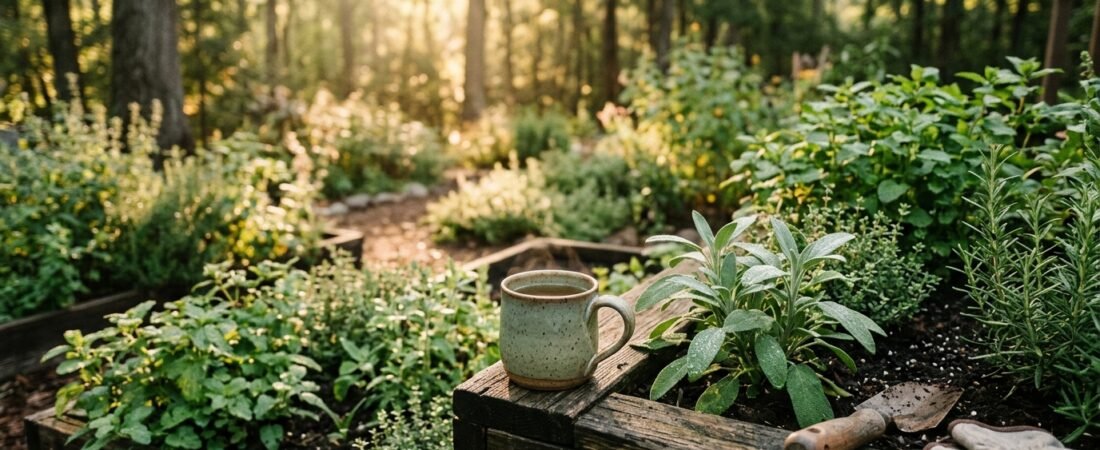
Nowadays, my morning walk through the garden is the stillest part of my routine. I step out with a warm mug in hand before the sun has cleared the ridge, long before checking any written notes or tending to the daily chores of the homestead. I like to run my fingers along the dew-soaked foliage, watch the solitary bees gather on the warming petals, and simply listen to the breeze moving through the cedar breaks.
A home garden will never give you quick remedies on a tight deadline, and that quiet slowness is perhaps its greatest gift. It teaches us to quiet our hands, to observe the earth beneath our feet, and to remember that the things that truly restore us take time to grow.
Educational Disclaimer: The thoughts and observations shared here are for educational and traditional homesteading interest only and do not replace professional medical advice. Always verify botanical identities and consult your healthcare practitioner regarding botanical preparations.